
![[IOP]](http://images.iop.org/cws/icons/themes/phw/colophon-small.png)


Tag archives: particle physics
In the footsteps of Cecil Powell
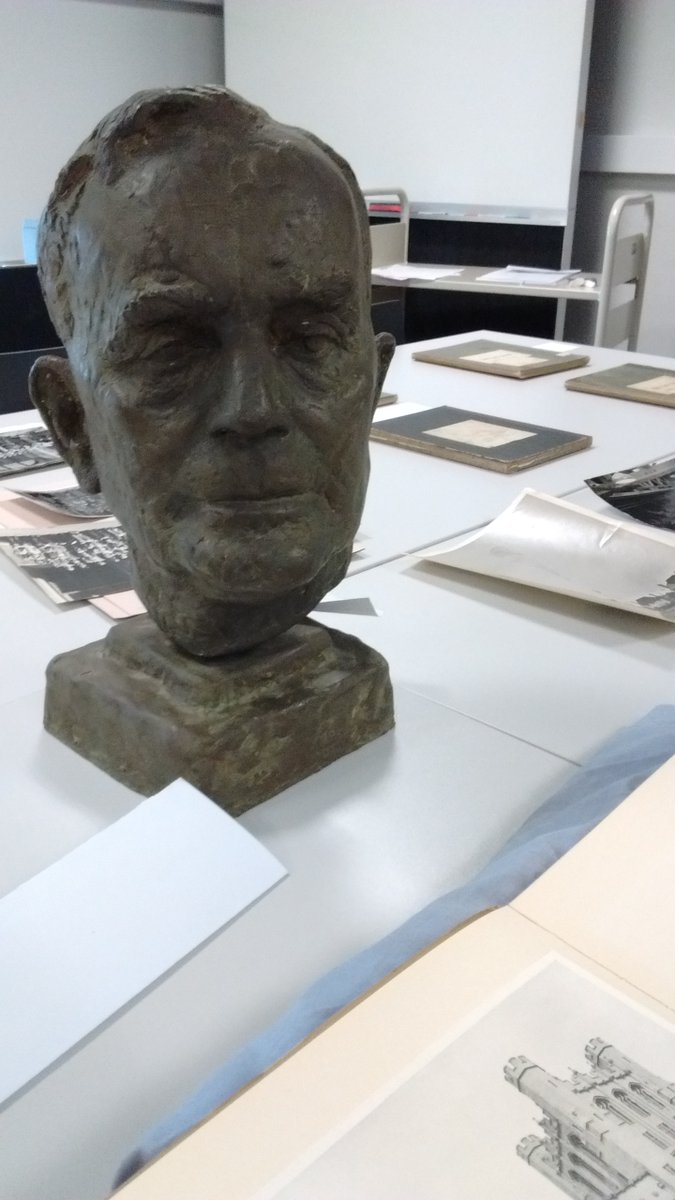
Pionic man: a bust of Cecil Powell. (Courtesy: University of Bristol Special Collections)
By Matin Durrani
I spent yesterday at the University of Bristol, where a meeting was held to celebrate the 70th anniversary of the discovery of the pion in 1947.
The particle was spotted by Cecil Powell, who joined the university’s physics department in 1928 and went on to win the 1950 Nobel Prize for Physics for his efforts.
At the time, the pion was thought to be the carrier of the strong nuclear force, which binds protons and neutrons in the nucleus, though we now know it is one of a family of strongly interacting mesons.
As we heard yesterday from introductory speaker Brian Pollard, Powell found evidence for the pion using a series of ingenious (and literally breathtaking) experiments that involved him taking specially manufactured photographic plates to high altitudes up the Pic-du-Midi mountain in the Pyrenees.
View all posts by this author | View this author's profile
The August 2017 issue of Physics World is now out
 By Matin Durrani
Who inspired you to study physics? Perhaps you had a great teacher or a supportive parent. But how might it feel if you’ve got a sibling who’s also into the subject? Would they be your rival or would the two of you support and nurture each other?
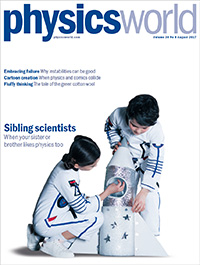
These issues facing “sibling scientists” are the cover feature of the August issue of Physics World magazine, which is now out. Turns out that sibling scientists are generally a force for good, especially with the elder child acting as a mentor and guide – often providing information, support and advice to the younger sister or brother.
I wonder in fact if we should do more to encourage boys and girls who are already in thrall with physics to persuade their siblings into the subject too. Of course, our feature isn’t an exhaustive scientific study, so do tell us if you know of other examples of sibling science.
Remember that if you’re a member of the Institute of Physics, you can read Physics World magazine every month via our digital apps for iOS, Android and Web browsers.
View all posts by this author | View this author's profile
Science, scepticism and fear at the theatre
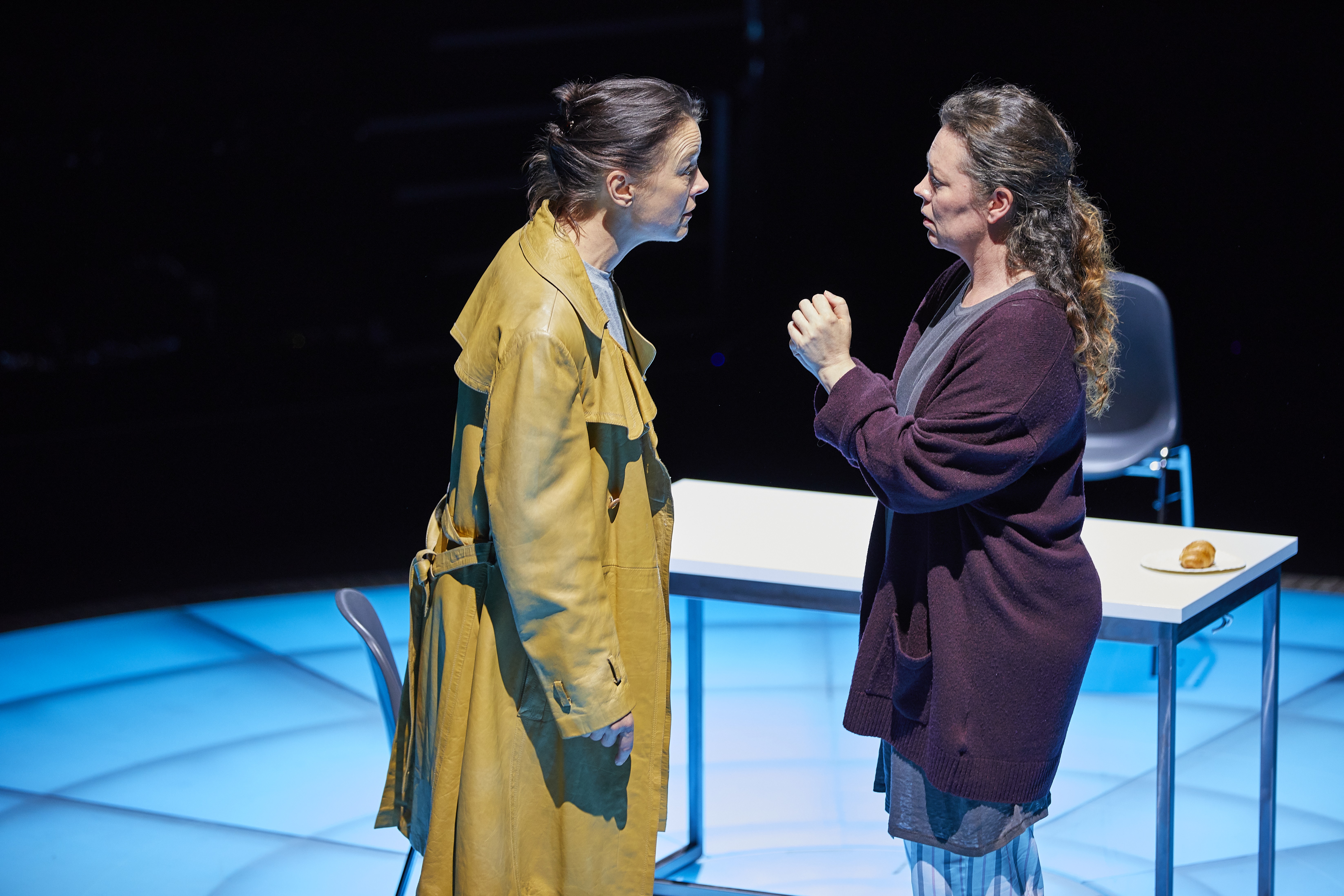
Sceptical siblings: Olivia Williams (left) and Olivia Colman in Mosquitoes by Lucy Kirkwood. (Courtesy: National Theatre/Brinkhoff & Mogenburg)
By Tushna Commissariat
Working at Physics World for the last six years has taken me to some pretty cool labs – everywhere from CERN to the Laser Interferometer Gravitational-wave Observatory (LIGO). My job has allowed me to meet some quite famous people too…at least in the world of physics, that is. But getting to spend a morning at the National Theatre in London watching Olivia Colman and Olivia Williams rehearse for a play is not usual even for me. That is precisely why I jumped at the chance, when I found out that the pair star as sisters in the recently opened play Mosquitoes.
You may be wondering what a play with that moniker has to do with physics. Mosquitoes tells the story of rational and lucid Alice (played by Williams), a particle physicist at the Large Hadron Collider (LHC), and her often-illogical sister Jenny (played by Colman) “who spends a lot of time Googling” and is easily swayed by the bad science she chances upon. Written by Lucy Kirkwood and directed by Rufus Norris – the National Theatre’s current artistic director, the play follows the siblings through a family tragedy, as well as the fairly disastrous switching on of the LHC in 2008, and takes a hard look at our relationships with science, facts, belief and so much more. Kirkwood, whose previous successes include Chimerica and The Children, was commissioned to write the play by the Manhattan Theatre Club as part of its Alfred P Sloan Foundation initiative, which aims to “stimulate artists to create credible and compelling work exploring the worlds of science and technology and to challenge the existing stereotypes of scientists and engineers in the popular imagination”.
View all posts by this author | View this author's profile
Happy birthday Fermilab
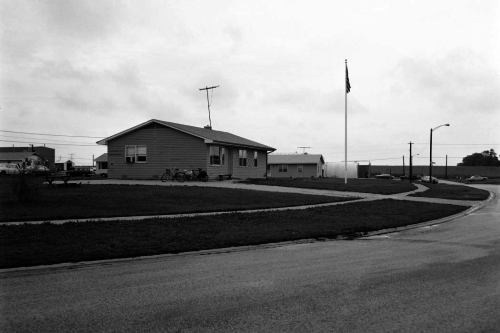
Little house on the prairie: the first director’s office on the National Accelerator Laboratory site. (Courtesy: Fermilab)
By Matin Durrani
Music lovers will remember 1967 as the year the Beatles released Sgt. Pepper’s Lonely Hearts Club Band. For sports fans it was the year when Celtic became the first British team to win football’s European Cup. As for scientists, 1967 will go down in history as the year in which the first human heart transplant took place and the first radio pulsars were detected by Jocelyn Bell Burnell, Antony Hewish and others at the University of Cambridge, UK.
View all posts by this author | View this author's profile
Send a birthday card to Fermilab, a huge periodic table, art meets quantum computing
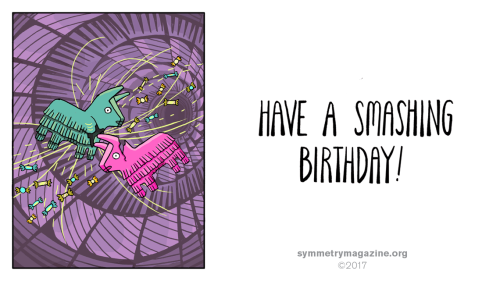
Best wishes: a birthday card for Fermilab (Courtesy: Corinne Mucha/ Symmetry)
By Hamish Johnston and Sarah Tesh
50 years ago this month, the particle physics facility that was to become Fermilab opened its doors for the first time. To celebrate a half a century of physics on the Illinois prairie, the folks at Symmetry have produced a set of themed birthday cards that you can print-out and send to your friends and family. Indeed, there is still time to send a card to Fermilab itself, because the big day isn’t until next Thursday (15th of June). My favourite card (above) uses colliding piñatas to illustrate the plethora of particles that were produced in Fermilab’s Tevatron – which smashed together protons and antiprotons between 1983-2011.
View all posts by this author | View this author's profile
Physics World investigative report bags writing award
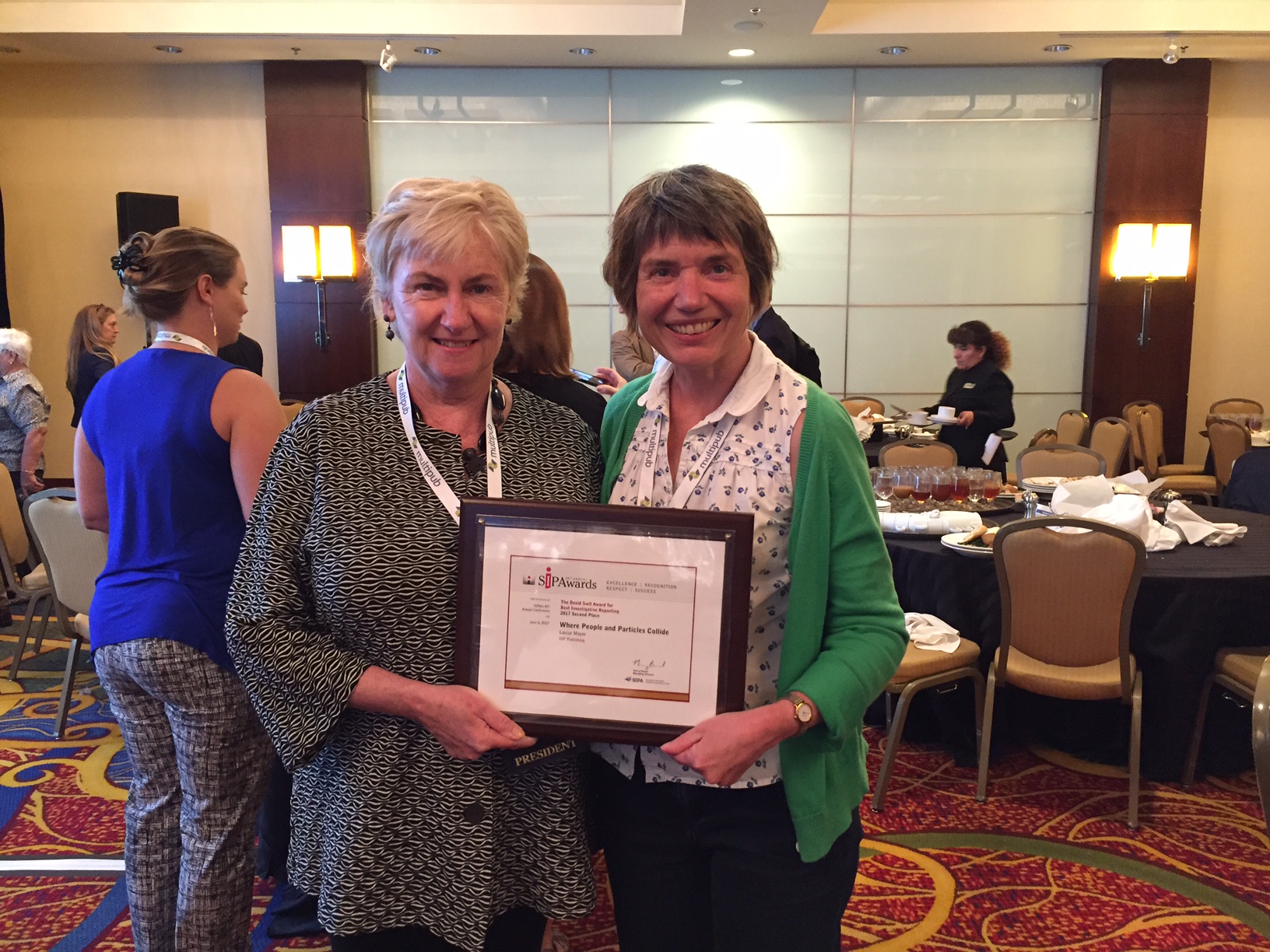
Stateside ceremony: Susan Curtis from IOP Publishing (right) picks up the award on behalf of Louise Mayor for her article “Where people and particles collide” from SIPA president Cynthia Carter in Washington DC.
By Matin Durrani
I am delighted to announce that Physics World features editor Louise Mayor has come second in the David Swit Award for Best Investigative Reporting in the 2017 awards from the Specialized Information Publishers Association (SIPA). Louise was recognized for her feature “Where people and particles collide”, which was published in the March 2016 special issue of Physics World on making physics a more inclusive discipline.
The article examined long-standing attempts by members of the LGBT CERN group at the CERN particle-physics lab near Geneva to become an official “CERN Club” – a request that was denied. It also reported how the group had received some negative reception at CERN, as evidenced by a poster-defacement campaign, photos of which were published in the article.
View all posts by this author | View this author's profile
Test your brains with the Physics World blackboard quiz

BLACKBOARD 1
By Matin Durrani
Can you tell what branch of physics is being described on the blackboard above? It’s one of six photographs taken by the communications folks at the Perimeter Institute for Theoretical Physics in Waterloo, Canada, where blackboards are an integral feature of the building’s design, appearing everywhere from the lifts to coffee areas.
In this quiz, your task is to study six blackboards and match them up with the physics topics they represent. There’s no prize, other than the satisfaction of having at least some inkling of what those clever theorists at the Perimeter are up to.
So here are the six topics:
• Accretion physics and general relativity
• Cosmology
• Neural networks and condensed matter
• Particle physics 1
• Particle physics 2
• Strings
And here are the six blackboards (you can click on each to see it in more detail).
A look back at peer-review week and particle physicists say hello to Hello Kitty
By Matin Durrani
Today marks the end of Peer Review Week – a “global event celebrating the essential role that peer review plays in maintaining scientific quality”. The event brought together “individuals, institutions and organizations committed to sharing the central message that good peer review, whatever shape or form it might take, is critical to scholarly communications”.
It’s probably fair to say that Peer Review Week – now in its second year – didn’t quite have the media profile of, say, London Fashion Week, but then you have to start somewhere. And celebrating peer review seems a worthy and worthwhile thing to do. I bet even Rio de Janeiro’s Restaurant Week started out small. (more…)
A horrific nightmare scenario at CERN, surfer wins SUSY bet, and meet the father of the Super Soaker
Surf’s up: Garrett Lisi when he is not winning bets with Nobel laureates. (CC BY-SA 3.0/Cjean42)
By Hamish Johnston
The “nightmare scenario” of particle physics has a new meaning thanks to a bizarre video that appears to have been made by some scientists at CERN. The video seems to have been filmed at night at CERN’s main campus in Geneva and depicts an occult ceremony in which a woman is stabbed. While the video appears to be a spoof and there is no indication that anyone was actually harmed in its making, CERN officials are rightly concerned that such violent scenes were filmed on their premises. “CERN does not condone this type of spoof, which can give rise to misunderstandings about the scientific nature of our work,” a spokesperson told Agence France-Presse.
View all posts by this author | View this author's profile
An animated history of physics, messing around with methane and Vangelis on space
By Hamish Johnston
Topping this week’s Red Folder is an “Animated history of physics” narrated by the Irish comedian and science enthusiast Dara O Briain. Running from Galileo to Einstein’s general theory of relatively – and giving very short shrift to quantum mechanics – it’s more of a selected history. You can enjoy the animations and O Briain’s soothing brogue in the video above.
O Briain often teams up with the particle physicist and media celebrity Brian Cox, who is also in the news recently for teaching children in London how to ignite potentially explosive gas. Before you call social services, it was all in the name of science education and part of Cox’s visit to St. Paul’s Way Trust School. Cox had been invited to the school’s summer science school and obliged by leading an experiment into the properties of methane. “There is no shortage of enthusiasm for students and young people when you talk about science and engineering,” Cox told the Reuters news agency.

